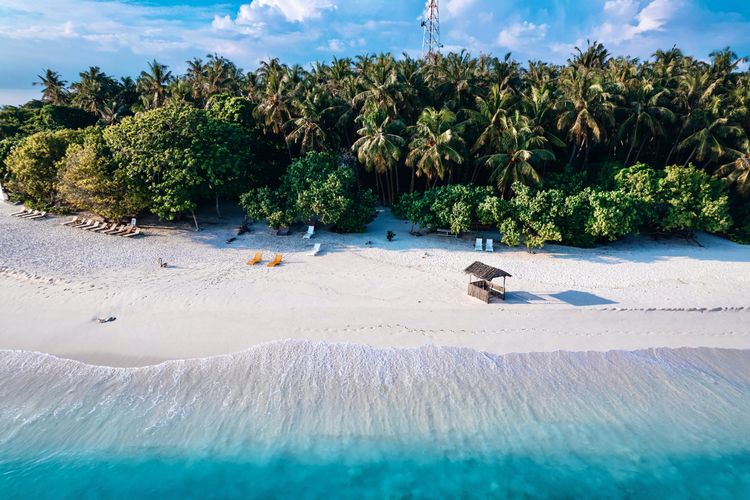
As your speedboat slices through the crystal-clear waters of North Ari Atoll, the traditional fishing village of Kamadhoo emerges from the turquoise expanse like a living postcard from the Maldives' authentic past. This intimate island, home to just over 600 residents, offers something increasingly rare in the modern Maldives: an unspoiled local island experience where coconut palms outnumber tourists and traditional dhonis still dot the harbor alongside modern speedboats. Located approximately 85 kilometers from Male, Kamadhoo provides budget-conscious travelers with access to some of the Maldives' most pristine house reefs while maintaining the genuine charm of a working fishing community. Here, morning calls to prayer blend with the sound of waves lapping against coral shores, and your biggest decision might be choosing between the world-class house reef diving just steps from shore or joining local fishermen for an authentic Maldivian cultural exchange.
Everything you need to know about Kamadhoo
How do I get to Kamadhoo from Male Airport?
Two main options: Speedboat $80-$120 for 1.5-2 hours or domestic flight to Maamigili plus speedboat
Complete transport guide →
What makes Kamadhoo special for marine enthusiasts?
Exceptional house reef with high probability of turtle and ray encounters, plus easy access to renowned South Ari Atoll dive sites
Marine adventures guide →
Where should I stay and what does it cost?
4-5 guesthouses ranging $40-$80 per night, all family-run with traditional Maldivian hospitality
Accommodation options →
When is the best time to visit for diving?
Year-round destination with best visibility December-April, whale shark encounters peak March-November
Seasonal planning guide →
What makes Kamadhoo different from other local islands?
Untouched by mass tourism, authentic fishing village atmosphere, and direct access to South Ari marine sanctuary
Island character guide →
What cultural guidelines should I know?
Conservative Muslim community with designated bikini beach, modest dress required in village areas
Cultural guide →
An Untouched Window into Traditional Maldives
While many local islands in the Maldives have embraced tourism development, Kamadhoo remains refreshingly authentic – a place where traditional boat-building still occurs on pristine beaches and where visitors are welcomed as honored guests rather than processed tourists. Unlike the busier local islands such as Maafushi or Dhigurah, Kamadhoo offers an intimate experience where you'll likely be among fewer than 20 tourists on the entire island at any given time.
Kamadhoo's house reef ranks among the Maldives' finest, offering easy shore access to coral gardens that rival expensive resort destinations at a fraction of the cost.
The island's greatest treasure lies just beyond its sandy shores. Kamadhoo's house reef represents one of the most accessible and biodiverse coral ecosystems in North Ari Atoll, offering snorkelers and divers the chance to explore pristine coral gardens without expensive boat trips. This untouched marine sanctuary hosts an incredible variety of tropical fish, frequent turtle encounters, and serves as a nursery area for juvenile reef sharks.
Marine Paradise: Kamadhoo's Underwater Treasures
Kamadhoo's location on the edge of South Ari Atoll places it at the heart of one of the Maldives' most celebrated marine ecosystems. The island's house reef, accessible directly from the beach, offers some of the finest shore diving and snorkeling experiences available on any local island.
Shore Diving: Free access 24/7, 3-15 meter depths, suitable for all experience levels
Visibility: 20-30 meters typical, best conditions December-April
Marine Life: High probability of turtles, rays, reef sharks, and over 100 fish species
Guided Dives: $30-$40 with local operators, 2-tank dives to outer reefs $60-$80
The house reef's accessibility makes Kamadhoo particularly appealing for serious divers and snorkelers. Unlike resort destinations where house reef access often requires specific schedules, Kamadhoo's reef is available whenever conditions permit. The coral drop-off begins just 30 meters from shore, creating an underwater landscape where vibrant coral gardens give way to deeper blue waters.
Signature Marine Encounters
Green and hawksbill turtles are regularly sighted along the reef's turtle highway, with encounter rates often exceeding 60% during longer snorkeling sessions. The reef's cleaning stations attract manta rays during the southwest monsoon (May-November), though sightings remain opportunistic rather than guaranteed. Nurse sharks frequently patrol the deeper sections, while schools of blue-striped snappers, fusiliers, and rainbow parrotfish create a constantly changing underwater kaleidoscope.
South Ari Atoll Access
Kamadhoo's strategic location provides easy access to South Ari Atoll's famous marine attractions. Day trips to whale shark hotspots near Dhigurah offer success rates around 70% during peak season, while manta ray excursions to cleaning stations show good encounter probability during southwest monsoon months. These excursions typically cost $80-$120 and include multiple dive sites and snorkeling opportunities.
Unlike crowded dive boats from resort areas, Kamadhoo-based marine excursions typically carry maximum 8-10 guests, ensuring personalized attention and uncrowded dive sites.
When to Visit: Timing Your Kamadhoo Adventure
Kamadhoo's appeal lies partly in its year-round diving and snorkeling opportunities, though distinct seasonal patterns affect marine life encounters and weather conditions.
Dry Season: December-April, best visibility 25-30 meters, calmer seas
Wet Season: May-November, manta ray season, lower accommodation prices
Whale Shark Peak: March-November, South Ari encounters 70%+ success
December through April represents Kamadhoo's peak diving season, with northeast monsoon winds creating calmer sea conditions and optimal underwater visibility. During these months, the house reef offers its clearest waters, making it ideal for underwater photography and spotting smaller marine life. However, this period also brings higher accommodation rates and the need for advance booking.
May through November brings the southwest monsoon, creating different but equally rewarding diving conditions. While surface conditions may be less predictable, this period offers manta ray encounters at South Ari cleaning stations and typically 20-30% lower accommodation rates. The increased plankton activity during this season also attracts whale sharks closer to the atoll edges.
For budget-conscious travelers, visiting during the shoulder months of May and November often provides the best balance of favorable conditions and lower costs. Marine life remains active, accommodation rates drop significantly, and the island maintains its peaceful atmosphere with minimal tourism pressure.
Getting to Kamadhoo: Your Complete Travel Guide
Reaching Kamadhoo requires some planning, as this authentic destination prioritizes traditional island life over tourist convenience. However, multiple transportation options ensure accessibility for various budgets and schedules.
Direct Speedboat: $80-$120, 1.5-2 hours from Male/Airport (advance booking required)
Via Maamigili: $170-$200 total, 20-min flight + 30-min speedboat
Public Ferry: $3-$5, 3-4 hours, limited schedule (Tuesday/Thursday typically)
Transportation from Male
Direct Speedboat Service provides the most straightforward route to Kamadhoo, though advance coordination with your accommodation is essential. Most guesthouses can arrange shared speedboat transfers for $80-$100 per person when traveling with other guests, or private transfers for $300-$400 total. Departure times typically align with guest arrivals, usually 10:00 AM or 2:00 PM from Male.
Domestic Flight Option via Maamigili Airport offers faster but more expensive access. Trans Maldivian Airways operates regular daily flights for $150-$170, followed by a 30-minute speedboat transfer for $20-$30. This option works particularly well for visitors with limited time or those continuing to other South Ari destinations.
Public Ferry Service represents the most budget-friendly option, though schedules are limited and subject to weather conditions. The ferry typically operates Tuesday and Thursday departures from Male, taking 3-4 hours for $3-$5. Return schedules often differ, requiring flexibility in travel plans.
Where to Stay
Kamadhoo offers 4-5 small guesthouses, all family-operated and reflecting traditional Maldivian hospitality. Accommodation ranges from $40-$60 for basic rooms to $60-$80 for upgraded facilities with air conditioning and private bathrooms. Most guesthouses include breakfast and offer full-board packages for $15-$25 per meal.
Kamadhoo View Inn and Alifu Inn represent the island's primary accommodation options, both offering clean, comfortable rooms and assistance with diving arrangements. All guesthouses provide complimentary snorkeling equipment and can arrange diving excursions, fishing trips, and cultural experiences.
Practical Tips
- Advance Booking Essential: Contact accommodation directly to coordinate transfers
- Cash Requirements: Limited ATM access; bring sufficient US dollars or Maldivian rufiyaa
- Diving Equipment: Basic rental available; serious divers should bring personal gear
- Communication: WiFi available at guesthouses, mobile coverage reliable
Kamadhoo: Maritime Heritage and Island Character
The name Kamadhoo derives from traditional Dhivehi language, referring to the island's historical role as a turtle nesting site and its abundance of maritime resources. Archaeological evidence suggests continuous habitation for over 800 years, with the community traditionally dependent on fishing, coconut cultivation, and boat building.
Kamadhoo remains one of the few Maldivian islands where traditional dhoni construction continues, with master craftsmen still building boats using techniques passed down through generations.
Today's Kamadhoo represents a fascinating blend of maritime tradition and modern island life. The harbor still welcomes traditional fishing dhonis each evening, their catches destined for Male's markets or local consumption. Coconut cultivation continues to provide supplementary income, while the island's strategic location has made it an emerging destination for discerning travelers seeking authentic Maldivian experiences.
Conservation Significance
Kamadhoo's house reef benefits from community-based conservation efforts, with local fishing practices designed to maintain reef health for future generations. The island participates in marine protection initiatives throughout North Ari Atoll, contributing to research on coral resilience and sustainable tourism practices.
Traditional Architecture
Walking through Kamadhoo reveals traditional Maldivian architecture alongside modern influences. Coral stone construction, palm-thatched roofs, and elevated designs reflect centuries of adaptation to tropical island life. The island's mosque, reconstructed in recent decades, serves as both spiritual center and architectural landmark.
Local Island Culture: What to Expect
As a conservative Muslim community, Kamadhoo maintains traditional values while welcoming international visitors with characteristic Maldivian warmth. Understanding local customs enhances your experience and demonstrates respect for island traditions.
Religious Observance and Daily Rhythm
Five daily prayer calls mark the island's rhythm, with brief pauses in commercial activities during prayer times. Friday prayers hold special significance, with most island activities pausing 11:30 AM-12:30 PM. Visitors can use this time for personal activities or quiet reef exploration.
Dress Code and Beach Areas
Kamadhoo provides a designated bikini beach area where swimwear is appropriate for all visitors. Throughout the village and other beach areas, modest clothing is required – covering shoulders and knees for both men and women. Most guesthouses provide guidance on appropriate attire and can suggest suitable clothing if needed.
Alcohol and Dietary Considerations
As an Islamic community, Kamadhoo prohibits alcohol throughout the island. All food preparation follows halal guidelines, with abundant fresh seafood, tropical fruits, and traditional Maldivian cuisine available. Most guesthouses accommodate dietary restrictions with advance notice.
Community Interaction
Kamadhoo residents often speak basic English, particularly those involved in fishing and small business. Visitors are welcome to observe daily activities such as fish cleaning, boat maintenance, and coconut harvesting. Photography of people requires permission, while mosque photography should be avoided during prayer times.
The island's small size creates natural opportunities for cultural exchange, whether joining evening fishing expeditions, learning traditional fishing techniques, or simply sharing sunset conversations with local families along the harbor wall.